
Microbial Ecology of Extreme Systems
+ BDíez Lab
Exploring Microbial Life at the Edge of Extremes
+ Research
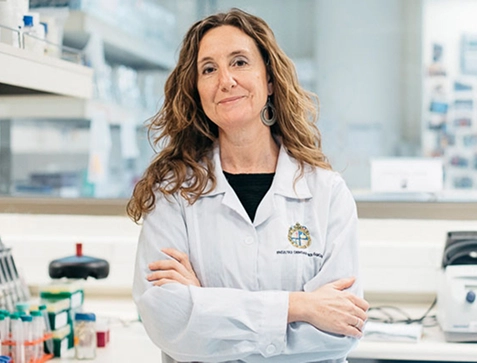
My research group works on solving fundamental questions in Microbial Ecology and Environmental Microbiology of Extreme Systems using “omics” methodologies and extremophilic organisms, in particular cyanobacteria as a model. We study diversity, function, biogeography, evolution and ecological role of microorganisms and viruses, impacting biogeochemical cycles, as well as their responses to environmental changes and perturbations and adaptations (metabolic, genetic and genomic).
+ Beatriz Díez
Full Professor at Universidad Mayor
PhD in Biology. Autonomous University of Barcelona, Spain
Interest
Microbial Ecology
Microbial Evolution
Environmental Virology
Global Scientific Networks
Education
PhD Ciéncias Biológicas, 2001
Universidad Autónoma de Barcelona, España
Licenciada en Biología, 1994
Universidad de Alicante, España


+ Field of Experience
01
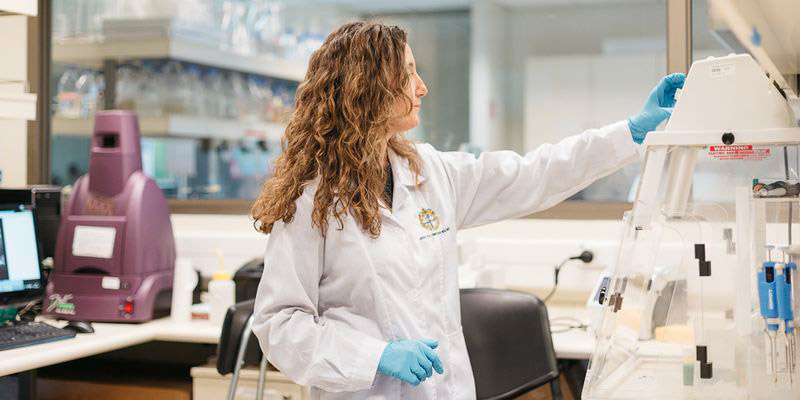
Experimental Lab and In Situ Field Experiments
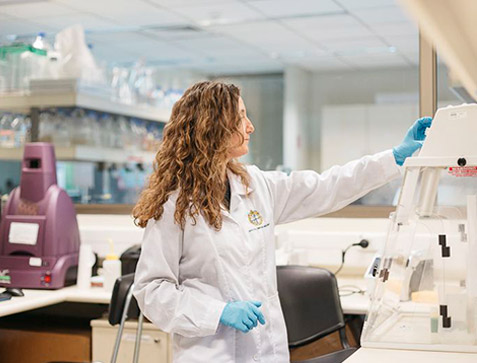
Our laboratory has extensive experience in cultivating and characterizing themophilic cyanobacteria under controlled conditions. We also perform experimental microcosms using seawater and microbial mat across thermal gradients. These experiments include light/dark cycles, chemical viral induction assays, and targeted perturbations to investigate microdiversity, viral communities, transcriptional responses, mobile genetic elements (mobilome), and horizontal gene transfer under changing environmental conditions.
02
Field Work
We carried out sampling campaigns in some of the planet’s most remote and extreme environments, including the West Antarctic Peninsula, Patagonian fjords, Atacama Desert, and El Tatio geothermal field. Our fieldwork includes the collection of water, sediment, soil, microbial mats and bioaerosols, along with in situ measurements of physicochemical parameters and DNA/RNA preservation. These efforts support long-term microbial and ecological monitoring, microbial time-series studies, and global comparative analyses.
03
Microscopy
We use light, epifluorescence, and electron microscopy to analyze microbial mats, soil, and marine samples. Microscopy plays a central role in our studies of microbial and viral community structure, spatial distribution, and activity in extreme habitats, such as hot springs and Antarctic ecosystems, often combined with nucleic acid staining to enhance resolution.
04
Molecular Biology
Our team employs a wide array of molecular techniques, including DNA and RNA extraction from challenging matrices, cDNA synthesis, PCR/qPCR amplification, etc. These tools allow us to analyze microbial diversity, metabolic activity, and gene expression from complex environmental samples.
05
Sequencing/Metabarcoding
We generate and analyze high-throughput sequencing data from environmental samples using 16S/18S rRNA and ITS genes, and viral markers (e.g., RdRp) metabarcoding, as well as shotgun metagenomics, metaviromics, and metatranscriptomics. Our projects include tracking microbial and viral taxonomic and functional shifts in response to temperature gradients, and other environmental stressors.
06
Computational Biology
Our lab integrates bioinformatic pipelines for (meta)genome assembly, binning of metagenome-assembled genomes (MAGs), functional annotation, phylogenetic and phylogenomic inference, evolutionary trace analysis, host-virus linkage predictions and ecological network analysis. Our workflows incorporate tools like Genomad, CheckM, GTDB-Tk, eggnog-mapper, DRAM, HMMER, and phyloFlash, among other, along with custom scripts to explore viral-host interactions, defense systems, and genomic comparison and adaptation.
07
Microbial Evolution
We investigate evolutionary patterns of gene gain/loss, codon usage bias, horizontal gene transfer, and viral-host coevolution in extremophiles. We study protein sequence adaptation and microdiversity in thermophilic and psychrophilic microbes across environmental gradients. Our research has revealed key adaptations in microbial and viral genomes, contributing to our understanding of environmental selection pressures in extreme environments.
08
Microbial Ecology
We investigate how microbial communities assemble, interact, and function across spatial and temporal gradients. We explore biogeochemical cycling, community succession, and the ecological roles of taxa in habitats such as hot spring mats, hyperarid soils, and marine polar waters. Our work examines microbial interactions, niche partitioning, community resilience to environmental perturbations, and the role of sentinel taxa and functions in these extreme ecosystems.
09
Environmental Virology
We characterize DNA and RNA viral communities —including bacteriophages, nucleocytoplasmic large DNA viruses (NCLDVs), and RNA viruses—using marker-based and metagenomic approaches. Our work highlights the diversity, transcriptional activity, ecological function by auxiliary metabolic genes (AMGs), and adaptive traits of viruses in cold and thermophilic ecosystems. We also employ host prediction models and reconstruct viral genomes to assess their roles in shaping microbial community dynamics and nutrient cycling.
10
Global Scientific Networks
BDíez Lab actively enganged in national and international collaborations and research consortia, including Horizon Europe (BlueTools) in Europe, and in Chile the Center for Genome Regulation (CGR), the Center for Climate and Resilience Research (CR2) and the Center of Excellence Ciencia & Vida. Our interdisciplinary collaborations span microbial ecology, evolution, genomics, and environmental sciences, contributing to global efforts to understand microbial biodiversity, adaptation, and ecosystem function.
+ Recent Post
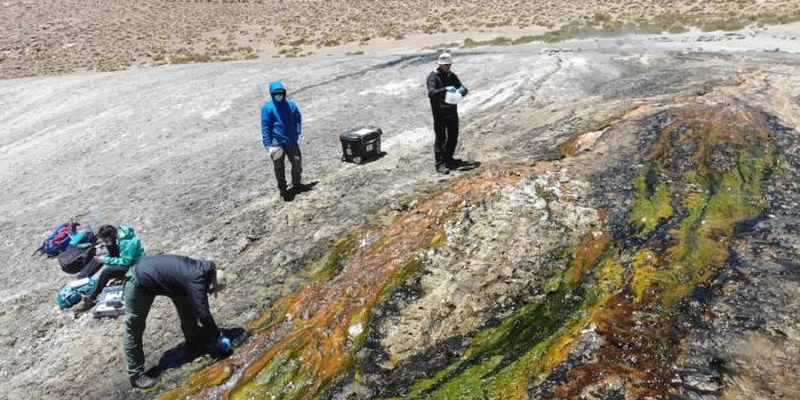
Viruses hidden in the thermal water of Tatio begin to be identified
Lorenzo Palma, Science in Chile. Every year more than 100,000 visitors arrive early in the morning, when the sun has not yet appeared in the Andes Mountains. They make an effort enduring the cold, the puna and getting up early to see some of the 40 geysers or 60 hot springs and 70 fumaroles that form the complex. They say that it is best appreciated before sunrise to see how the water emerges at 90 degrees Celsius and at an impressive and dangerous pressure.
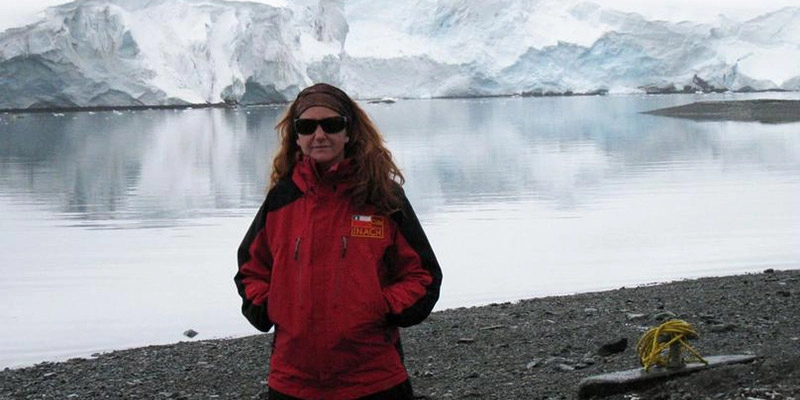
The Southern Ocean is conceived as a natural laboratory
The Southern Ocean is conceived as a natural laboratory, which presents unique and challenging characteristics for any organism, such as low temperatures and high radiation, and despite this, they recently confirmed the presence of more than 2000 previously unidentified virus genomes.
A microbial ecologist’s paradise
Interview with Dr. Beatriz Díez for Paula Magazine – La Tercera For Beatriz Díez (47) it’s all about the sea, that dark and immeasurable mass